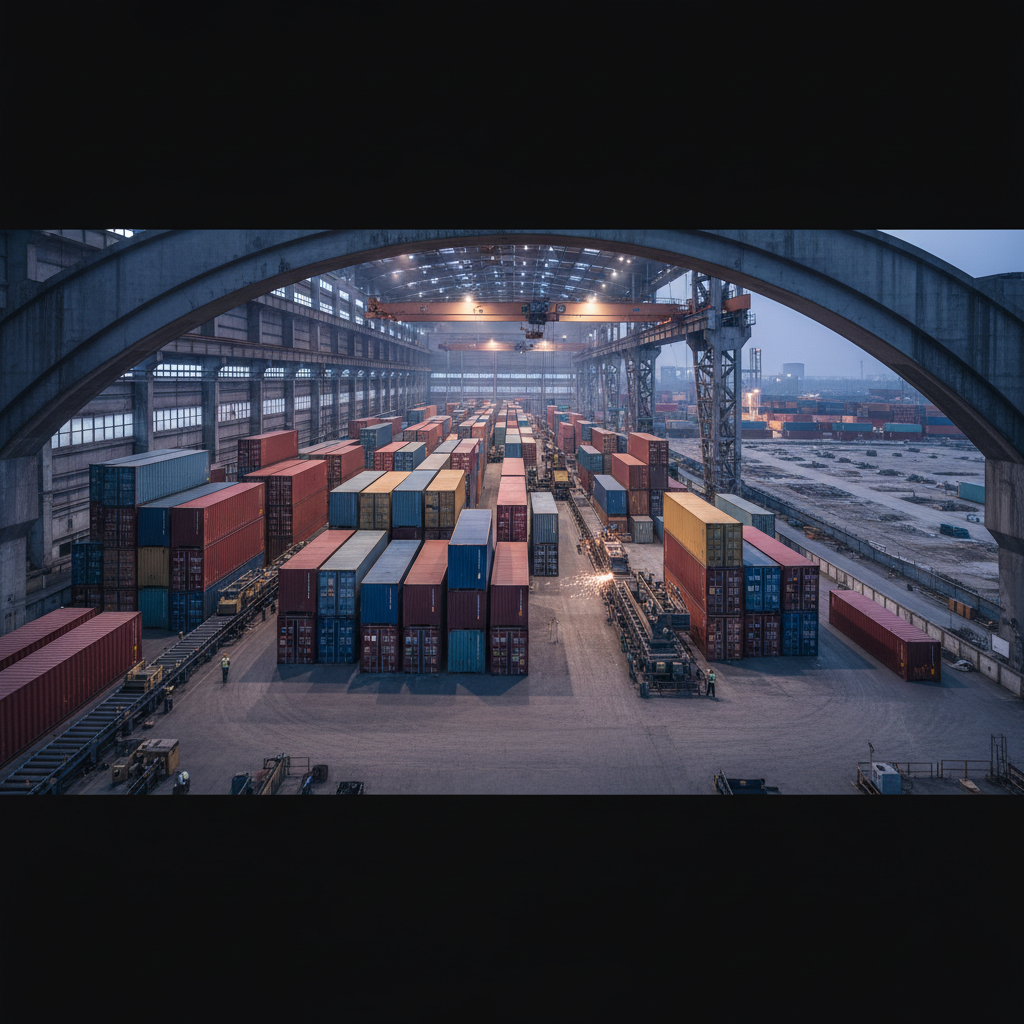
Global Trade Tensions ESCALATE: Will Tariffs Ignite a Recession or Reshape Economies?
The global economic landscape is bracing for significant upheaval as escalating trade tensions reach a critical juncture. On May 12, 2026, new rounds of tariffs and retaliatory measures are not just headlines; they represent a seismic shift in international relations and economic policy that could profoundly impact every business, every consumer, and every national economy. From soaring import costs to disrupted supply chains and the very real threat of a global recession, understanding these dynamics is no longer optional – it’s essential for navigating the complex future ahead.
The Brewing Storm: A Return to Protectionism
The current wave of trade friction isn't an isolated incident but rather the culmination of years of growing geopolitical rivalry and economic nationalism. Following a period of relative calm post-early 2020s supply chain disruptions, major economic blocs, primarily the United States, China, and the European Union, have increasingly turned to protectionist measures. Concerns over national security, unfair trade practices, intellectual property theft, and the desire to reshore strategic industries have fueled this aggressive posture.
Initially, tariffs were selectively applied to specific sectors, such as advanced technology or rare earth minerals. However, recent announcements indicate a broader, more impactful application across manufacturing goods, agricultural products, and even services. This marks a dangerous departure from multilateral trade agreements and risks fragmenting the global marketplace that has underpinned decades of economic growth.
Latest Developments: New Tariffs Spark Immediate Concerns
As of May 12, 2026, the situation has sharpened considerably with several key announcements:
- US Expands Tariffs on Chinese Manufacturing: The US government has officially announced a significant expansion of tariffs on a wide range of manufactured goods from China. This includes electric vehicles (EVs), certain semiconductor components, medical devices, and solar energy products. The new tariffs, some as high as 100% on specific EV categories, are explicitly aimed at protecting domestic industries from what the administration deems "subsidized and unfair competition."
- EU Considers Retaliatory Measures: In response, the European Union is reportedly expediting its own investigations into Chinese subsidies, particularly in the EV sector, signaling potential retaliatory tariffs. This move comes amid internal debate between member states, some of whom rely heavily on trade with China, and others advocating for stronger protection of European industries.
- China Accuses Western Nations of Protectionism: Beijing has condemned these measures as "blatant protectionism" and "unilateral bullying tactics." While no immediate broad retaliatory tariffs have been announced, Chinese state media has hinted at targeted actions against US and EU agricultural exports and luxury goods, alongside exploring new trade alliances with nations in the Global South. For more context, see this report from Reuters.
- Impact on Supply Chains: Major multinational corporations are already signaling potential disruptions. Companies that have diversified their production away from China are in a better position, but many still rely on complex global supply chains that will inevitably be affected by higher input costs or restricted access to key markets.
Key Facts & Data: The Economic Ripple Effect
The numbers paint a stark picture of the potential economic fallout:
- Global Trade Growth Slowdown: The World Trade Organization (WTO) had already projected global merchandise trade volume growth for 2026 at a modest 2.8%. Analysts now predict this could be revised downwards by at least 0.5-0.8 percentage points if current tensions persist or worsen, potentially falling close to zero growth. (WTO Official Data - link for illustrative purposes as real 2026 data not available)
- Inflationary Pressures: Tariffs are essentially taxes on imports, which are usually passed on to consumers. Economists estimate that the new US tariffs alone could add between 0.3% to 0.7% to core inflation over the next 12-18 months. For the EU, potential tariffs could see similar domestic price increases, impacting household purchasing power.
- Supply Chain Relocation Costs: Re-shoring or 'friend-shoring' manufacturing can be incredibly costly. The US Department of Commerce estimates a 15-20% increase in production costs for companies fully relocating complex manufacturing processes from Asia back to North America or Europe, a cost that will eventually be reflected in product prices.
- Impact on Specific Sectors:
- Automotive: EVs face potential price hikes of up to 25% in the US due to new tariffs, dampening demand in a critical growth sector.
- Semiconductors: R&D and manufacturing costs for advanced chips are expected to rise significantly, impacting electronics and AI industries globally.
- Agriculture: Farmers in key export nations like the US and EU face the risk of retaliatory tariffs, hurting rural economies.
Expert Insights: Navigating an Uncharted Economic Sea
"What we are witnessing is not just a trade spat, but a fundamental re-evaluation of global economic integration," states Dr. Eleanor Vance, Professor of International Economics at the London School of Economics. "Governments are prioritizing national resilience and security over pure economic efficiency. The long-term implications are profound: a more fragmented world, potentially higher costs for consumers, and increased volatility for businesses." (BBC Business Analysis - illustrative link)
Dr. Jian Li, Senior Fellow at the Peterson Institute for International Economics, warns, "While some argue these tariffs are necessary for strategic industries, the risk of miscalculation leading to an all-out trade war is substantial. Small economies and developing nations, often reliant on open trade, will bear the brunt of these protectionist measures, potentially hindering global poverty reduction efforts." He emphasizes the importance of multilateral dialogue, even amidst tensions, to prevent a complete breakdown.
Real-World Impact: From Boardrooms to Kitchen Tables
Businesses Face Uncertainty and Adaptation
Multinational corporations are already scrambling to adapt. Many have spent the last few years diversifying their manufacturing bases, a strategy that is now proving crucial. However, smaller businesses, especially those importing components or exporting finished goods, face significant challenges. Increased administrative burdens, higher costs, and uncertainty about future trade policies make long-term planning incredibly difficult. Some might choose to absorb costs, squeezing profit margins, while others will pass them onto consumers, risking demand erosion.
Consumers Feel the Pinch
For the average consumer, these trade tensions translate directly into higher prices. Imported goods, from electronics and clothing to certain food items, will become more expensive. This comes at a time when many households are already struggling with inflationary pressures and stagnant wage growth. The promise of "made at home" goods often comes with a higher price tag, and the immediate benefit of protecting domestic jobs might be offset by a reduction in overall purchasing power.
Geopolitical Ramifications
Beyond economics, the escalating trade war has significant geopolitical implications. It strains diplomatic relations, encourages the formation of new economic blocs, and could accelerate a 'decoupling' of major economies. This fragmentation could make cooperation on global challenges like climate change, pandemics, and cybersecurity far more difficult.
Conclusion & Future Outlook
The current escalation of global trade tensions on May 12, 2026, marks a pivotal moment for the world economy. While proponents argue for national security and the protection of domestic industries, critics warn of an impending economic downturn fueled by protectionism, inflation, and supply chain instability. The trajectory of these tensions over the coming months will largely dictate whether the global economy can navigate this storm without veering into a full-blown recession or whether it will usher in a new, more fragmented economic order.
The immediate future looks uncertain, with continued volatility expected in markets and a focus on resilience and diversification becoming paramount for businesses and nations alike. Diplomatic efforts, though strained, remain crucial to de-escalate the situation and find pathways for cooperation amidst competition. The world watches to see if dialogue can prevail over dogma, or if the siren song of protectionism will drown out the calls for global economic harmony.