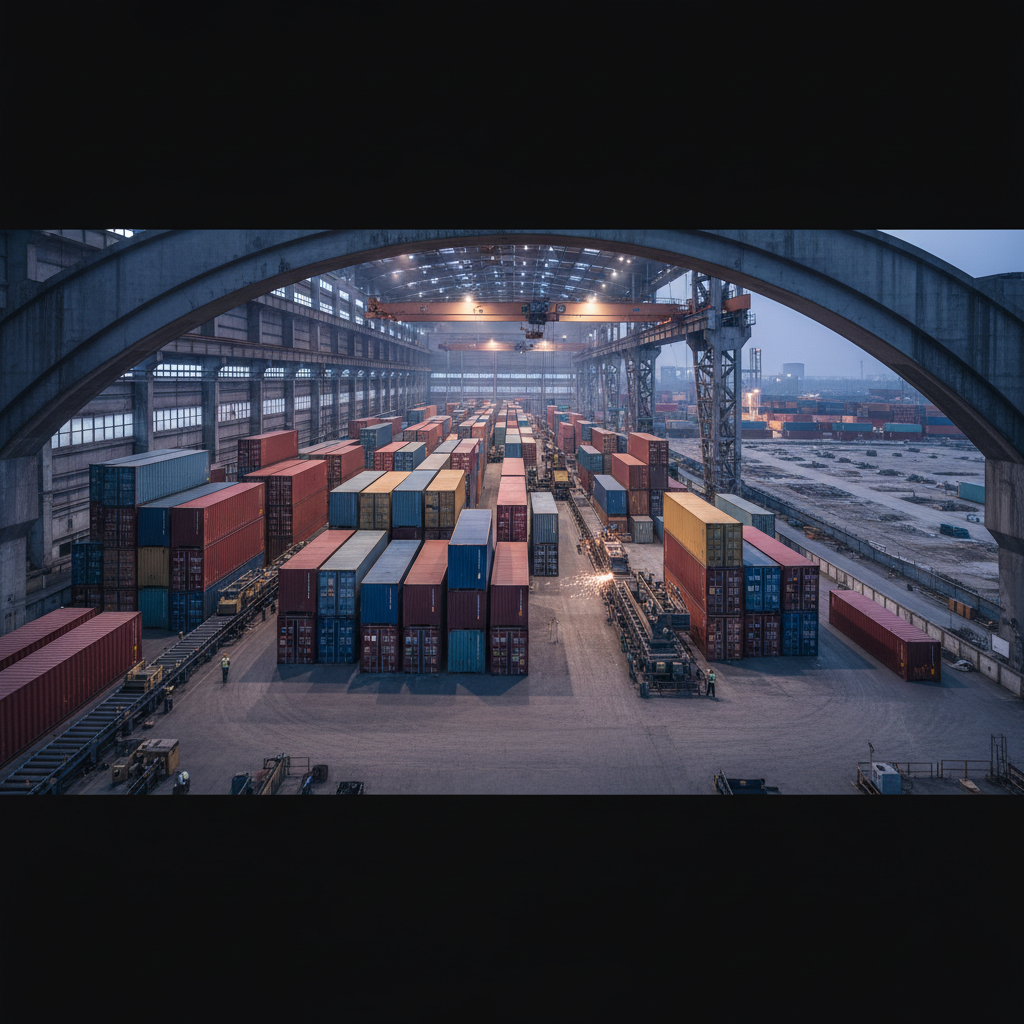
Global Supply Chains Brace for Seismic Shift: Is Nearshoring the New World Order?
In an era defined by volatility, uncertainty, complexity, and ambiguity (VUCA), the bedrock of global commerce—our intricate supply chains—is experiencing a tectonic shift. For decades, the mantra of efficiency and cost-cutting drove companies to offshore production to distant lands, optimizing for the lowest price. Today, however, a new imperative is emerging: resilience. This profound re-evaluation is fueling a surge in "nearshoring," a strategic maneuver where businesses relocate manufacturing and services closer to their primary markets. On May 14, 2026, this trend isn't just a discussion point; it's an economic force reshaping industries from automotive to electronics, dictating the winners and losers in a rapidly evolving global trade landscape. The implications are enormous, promising both significant opportunities and formidable challenges for businesses, workers, and national economies alike.
The Unraveling of Hyper-Globalization: A Look Back
For nearly half a century, the global economy embraced hyper-globalization, a philosophy that championed interconnectedness and specialized production scattered across the globe. Driven by advancements in logistics, communication, and free-trade agreements, companies relentlessly pursued cost efficiencies, often leading to geographically distant, single-source dependencies. China, in particular, became the "world's factory," integrating deeply into almost every major supply chain.
This model, while delivering unprecedented consumer choice and lower prices, was not without its vulnerabilities. Early warning signs emerged with events like the 2011 Japanese earthquake and tsunami, which disrupted automotive and electronics production worldwide. However, it took the confluence of the COVID-19 pandemic, escalating geopolitical tensions (particularly U.S.-China relations and the war in Ukraine), and extreme weather events exacerbated by climate change, to truly expose the fragility of these extended, optimized-for-cost supply networks. Factories shut down, shipping costs skyrocketed, and just-in-time inventory systems crumbled, leading to widespread shortages for everything from semiconductor chips to medical supplies. The economic shockwaves were undeniable, forcing a critical re-evaluation of national and corporate strategies.
Latest Developments: The Nearshoring Acceleration
As of mid-2026, nearshoring is no longer a theoretical concept; it's a rapidly accelerating reality. Companies are actively divesting from over-reliant, distant locations and establishing new production hubs closer to home. Mexico, for example, has seen an unprecedented influx of foreign direct investment, with its manufacturing sector expanding rapidly to serve the North American market. Similarly, Central European nations are benefiting from German and Western European companies looking to shorten supply lines and diversify away from Asian manufacturing.
Investments and Infrastructure Boom
Recent reports indicate a dramatic increase in capital expenditure directed towards manufacturing facilities in regions adjacent to major consumer markets. In the past year alone, several multinational corporations have announced significant investments:
- Automotive Giants: Major car manufacturers are expanding their Mexican operations, focusing on electric vehicle (EV) component production and final assembly, aiming to reduce trans-oceanic shipping times and mitigate tariff risks. See Reuters for latest industry moves.
- Tech Sector Shift: While high-end chip fabrication remains highly localized (e.g., Taiwan, U.S. investments), assembly and lower-tier component manufacturing for consumer electronics are increasingly moving to Southeast Asia (e.g., Vietnam, Malaysia) for products destined for the APAC market, and to Eastern Europe for the EU.
- Reshoring Initiatives: Governments are actively promoting domestic production through incentives, tax breaks, and infrastructure investments. The U.S. CHIPS and Science Act is a prime example, encouraging semiconductor manufacturing within American borders, while the EU is pursuing similar strategic autonomy in crucial sectors.
Regulatory and Geopolitical Drivers
Beyond pure business calculations, regulatory shifts and geopolitical dynamics are robust drivers of nearshoring. Tariffs, trade embargoes, and export controls are making cross-border logistics more complex and expensive. Furthermore, national security concerns are prompting governments to incentivize the domestic production of critical goods, from pharmaceuticals to defense components. The desire for greater supply chain visibility and control, especially concerning environmental, social, and governance (ESG) factors, also plays a significant role.
Key Facts & Data
- FDI Shift: Foreign Direct Investment (FDI) into Latin America, particularly Mexico, surged by 25% in 2025, largely attributed to nearshoring activities targeting the North American market. (Source: UNCTAD)
- Manufacturing Output: Countries like Vietnam and Poland reported double-digit growth in manufacturing output in 2025, directly linked to relocated production from China.
- Logistics Costs: Average ocean freight costs, while down from their 2021-2022 peaks, remain volatile. Businesses report that predictability and shorter lead times offered by nearshoring are now more valuable than marginal cost savings from distant production.
- Job Creation: Nearshoring initiatives are projected to create over 1.5 million manufacturing jobs globally in recipient countries over the next five years, offsetting some job losses in traditional sourcing hubs.
- Digital Integration: Investment in digital supply chain technologies (e.g., AI for demand forecasting, IoT for real-time tracking) is up 40% year-over-year, crucial for managing more complex, regionalized networks.
Expert Insights
"The era of 'just-in-time' has given way to 'just-in-case' and 'just-in-region'," states Dr. Elena Petrova, a leading economist at the Global Trade Institute. "Companies are realizing that the true cost of a product isn't just its manufacturing price, but also the risk associated with its journey. Geopolitical stability, labor availability, and consistent energy supply are now equally, if not more, important considerations than cheap labor costs alone." She emphasizes that this isn't a complete reversal of globalization, but rather a "regionalization" where trade blocs become more self-sufficient.
Maria Lopez, CEO of a major logistics firm, adds, "Our clients are no longer asking how to get goods from A to Z cheapest, but how to get them from A to B reliably and quickly with minimal disruption. This means new rail links, expanded port capacities, and sophisticated cross-border customs solutions are becoming paramount in regions like North America and the EU." Further insights can be found on BBC Business.
Real-World Impact
The real-world implications of nearshoring are multifaceted, creating winners and losers across the global economic landscape.
For Businesses:
- Increased Resilience: Shorter supply chains reduce exposure to distant geopolitical risks, natural disasters, and pandemics.
- Faster Time-to-Market: Proximity to consumers allows for quicker response to demand shifts, reduced inventory, and faster product launches.
- Higher Costs (Potentially): Labor and regulatory costs in nearshoring destinations can be higher than in traditional offshore hubs, requiring strategic planning and automation to maintain competitiveness.
- Quality Control: Closer proximity can allow for better oversight of manufacturing processes and product quality.
For Workers:
- Job Growth in Recipient Nations: Countries like Mexico, Eastern Europe, and parts of Southeast Asia are experiencing a manufacturing job boom.
- Skill Demands: The new manufacturing facilities often require higher-skilled labor, driving demand for technical training and vocational education.
- Wage Pressures: Increased competition for skilled labor in nearshoring hubs could lead to upward wage pressures.
For National Economies:
- Economic Diversification: Nations receiving nearshored investments can diversify their economies beyond raw materials or agriculture.
- Infrastructure Strain: Rapid industrial growth places strain on existing infrastructure, requiring significant government investment in energy, transportation, and housing.
- Environmental Concerns: Increased manufacturing activity closer to densely populated areas raises environmental impact concerns, necessitating robust regulatory frameworks. The U.S. Department of Commerce offers resources on economic impact.
- Regional Integration: Nearshoring naturally strengthens trade and economic ties within regional blocs, potentially leading to greater political cooperation.
The shift is not without its challenges. It demands significant upfront investment, meticulous risk assessment, and a deep understanding of new regulatory environments. Moreover, the transition period can be bumpy, as existing contracts are unwound and new partnerships forged. For nations and companies historically reliant on cheap external production, the adaptation required is substantial.
Conclusion and Future Outlook
The narrative of global supply chains is fundamentally changing. The era of pure cost optimization is giving way to a more nuanced approach where resilience, speed, and geopolitical stability are paramount. Nearshoring is poised to redefine global manufacturing and trade, creating robust regional economic blocs while potentially recalibrating the balance of economic power.
Looking ahead, by 2030, we can expect to see further consolidation of manufacturing within key regional hubs. Automation and advanced robotics will play an even greater role in mitigating higher labor costs in these areas, making nearshoring a more economically viable long-term strategy. Governments will continue to develop sophisticated industrial policies to attract and retain these vital investments, viewing supply chain resilience as a national security imperative.
However, this shift will also necessitate ongoing adaptation. Companies will need to invest heavily in workforce training, digital integration, and sustainable practices. The environmental footprint of increased regional manufacturing will also come under intense scrutiny, pushing for greener production methods. The global supply chain will not revert to local-only production, but it will undoubtedly become more localized, more diversified, and ultimately, more robust. The journey from hyper-globalization to intelligent regionalization is well underway, promising a future of both disruption and renewed stability.