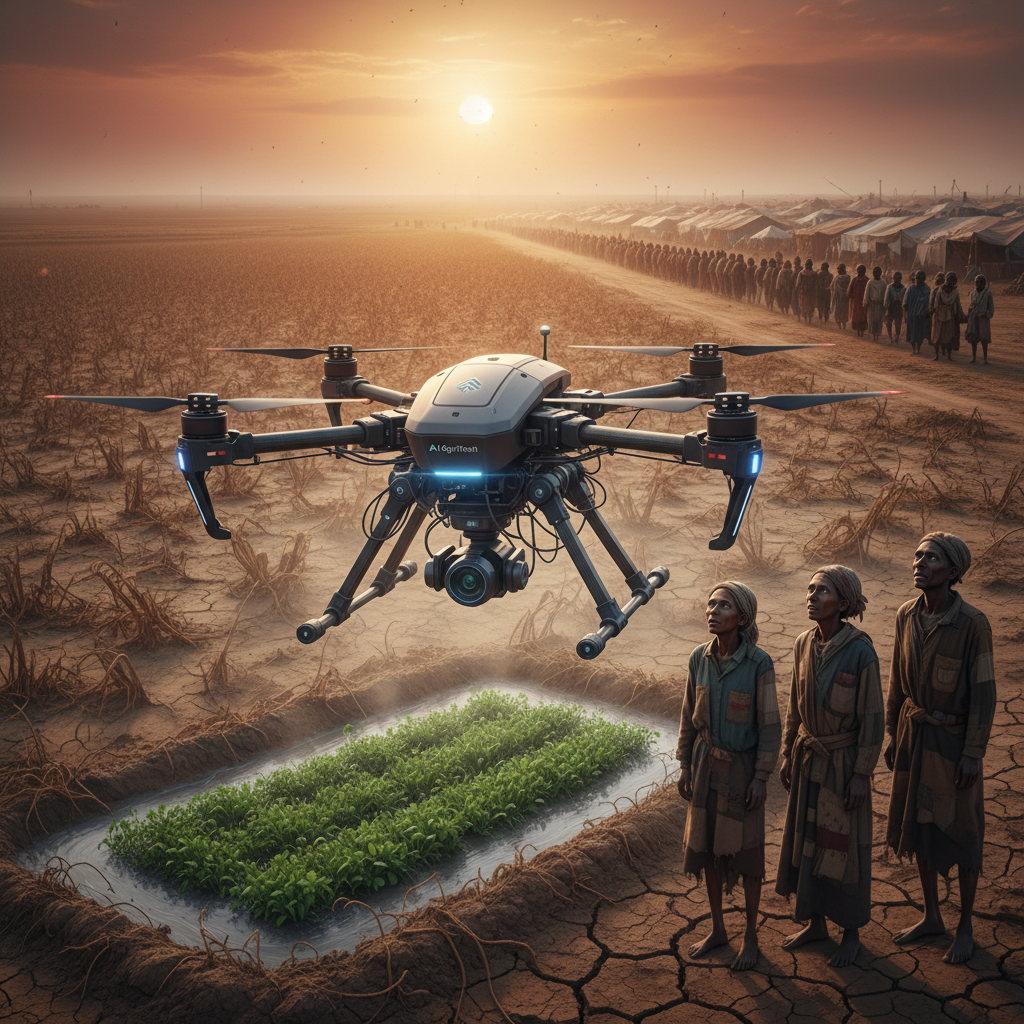
Global Food Security Crisis Deepens: A Perilous Plunge Towards Widespread Famine
The world stands at a perilous precipice. As May 2026 unfolds, a deepening global food security crisis is casting a long, dark shadow over millions, threatening to plunge vulnerable populations into widespread famine. This isn't merely a localized issue; it's a cascading confluence of climate chaos, geopolitical turmoil, and economic strain that is rapidly eroding food access and exposing the fragility of our global supply chains. The urgency is palpable, and understanding the multifaceted challenges is crucial for navigating what promises to be one of the defining humanitarian crises of our generation.
Background: A Perfect Storm Brewing for Years
The roots of the current crisis are complex, having festered and intertwined over several years. While food insecurity is not a new phenomenon, the scale and intensity we are now witnessing are alarming. Traditionally, localized conflicts or severe droughts would trigger regional food shortages. However, since the early 2020s, a series of interconnected global shocks have systematically weakened the world's ability to feed itself.
Firstly, climate change has escalated from a long-term threat to an immediate daily reality for agriculture. Unpredictable weather patterns, including sustained droughts in major agricultural regions, unprecedented flooding, and late-season frosts, have decimated harvests and disrupted planting cycles across continents. Major grain-producing nations have reported successive years of below-average yields, contributing to dwindling global reserves.
Secondly, geopolitical instability has choked off critical trade routes and exacerbated existing humanitarian emergencies. Ongoing conflicts in several key agricultural zones and strategic shipping lanes have not only displaced millions from their farmlands but also hindered the distribution of vital food aid and commercial staples. Export bans and protectionist policies adopted by some nations, seeking to secure domestic supplies, have further amplified global price volatility.
Thirdly, economic inflation, a persistent challenge, has driven up the cost of food, fuel, and fertilizer. For low-income countries and many households, this has effectively priced essential foodstuffs out of reach. The elevated costs of agricultural inputs, such as diesel for farm machinery and synthetic fertilizers, have also squeezed farmers' margins, leading to reduced production or abandonment of fields.
Latest Developments: A Critical Snapshot (May 2026)
The situation in May 2026 reveals a dire landscape characterized by intensifying challenges:
- East Africa on the Brink: Following years of insufficient rainfall and recurring droughts, parts of East Africa are facing potentially catastrophic levels of hunger. Organizations like the World Food Programme (WFP) report that millions are in emergency or catastrophe phases of food insecurity, with acute malnutrition rates among children soaring. Livestock deaths are widespread, eliminating a crucial asset for many pastoral communities.
- Grain Reserves at Historic Lows: Global wheat, corn, and rice reserves have dipped to levels not seen in decades. Major commodity market reports indicate that the ratio of stocks to utilization is dangerously thin, leaving little buffer against further supply shocks. This has directly contributed to sustained high commodity prices on international markets.
- Fertilizer Shortages Persist: Despite some efforts to mitigate the issue, global fertilizer availability remains constrained, driving up costs significantly. Farmers in developing nations, unable to afford expensive inputs, are reducing planted areas or foregoing fertilization, directly impacting crop yields for the upcoming seasons.
- Trade Route Disruptions: Ongoing geopolitical tensions continue to affect critical maritime routes, particularly those in the Black Sea and parts of the Red Sea. Shipping costs remain elevated due to increased insurance premiums and rerouting, adding to the final cost of imported food for many nations.
- Funding Gaps for Aid: Humanitarian organizations are struggling to meet the escalating needs. Appeals for emergency food assistance are severely underfunded, leaving millions without crucial aid. Donor fatigue, combined with domestic economic pressures, is making fundraising increasingly challenging.
Key Facts & Data
- 345 million: The number of people acutely food-insecure or at high risk in 2025, projected to increase significantly in 2026, according to the Global Report on Food Crises (2025 edition data, indicating trends).
- 50 million: The estimated number of people in 45 countries who are one step away from famine or already experiencing famine-like conditions, as reported by the WFP in early 2026.
- 30-40%: The average increase in global food prices since early 2022, compounding the crisis for vulnerable households.
- 7 consecutive seasons: The duration of below-average rainfall in some parts of the Horn of Africa, contributing to unprecedented drought conditions.
- < 3 months: The estimated global wheat stock-to-use ratio, considered dangerously low by agricultural economists.
- 85%: The percentage of agricultural land in some West African nations affected by severe locust outbreaks in late 2025, further damaging crops.
Expert Insights
"We are witnessing an unprecedented convergence of threats that are overwhelming our existing food systems," states Dr. Anya Sharma, a leading expert in agricultural economics at the London School of Economics. "Climate change is no longer just a risk multiplier; it is a primary driver of acute food insecurity. Add to that the persistent geopolitical fragmentation and inflationary pressures, and you have a recipe for widespread disaster. The current 'business as usual' approach is simply inadequate."
Professor Mark O'Connell, a geopolitical analyst at the Council on Foreign Relations, emphasizes the human element. "Conflicts are not only displacing people but also disrupting the very fabric of food production. Farmers can't farm, markets can't function, and aid can't reach those in need when violence prevails. Food is increasingly being weaponized, either directly or indirectly, exacerbating humanitarian suffering and destabilizing entire regions."
Maria Lopez, head of operations for a major international aid organization, paints a stark picture from the ground. "Our teams are seeing levels of malnutrition that are heartbreaking. Children are bearing the brunt of this crisis. We are making impossible choices about who to feed and where to prioritize dwindling resources. Without a massive, coordinated international response, we will see preventable deaths on a scale not witnessed in decades."
Real-World Impact
The deepening food crisis is having profound and devastating real-world impacts across multiple dimensions:
- Increased Malnutrition and Mortality: The most immediate and tragic consequence is the surge in acute malnutrition, particularly among children, pregnant women, and the elderly. This leads to higher rates of disease, stunted development, and ultimately, increased mortality. Healthcare systems in affected regions are overwhelmed by hunger-related illnesses.
- Mass Displacement and Migration: As communities lose their ability to sustain themselves through farming or pastoralism, large-scale internal and cross-border displacement is inevitable. People are forced to leave their homes in search of food and livelihoods, often becoming refugees or internally displaced persons, placing additional strain on host communities and humanitarian resources. This can also fuel social unrest and regional instability.
- Economic Collapse and Poverty Traps: For many nations heavily reliant on food imports, the soaring prices are unsustainable, leading to economic instability, currency devaluation, and rising national debt. Households are forced to sell assets, pull children out of school, and adopt desperate coping mechanisms, trapping them in cycles of poverty.
- Social Unrest and Instability: Food shortages and high prices are historically potent catalysts for social unrest and political instability. Protests, riots, and even governmental collapses can occur when populations are unable to access basic sustenance, creating a ripple effect of insecurity across regions.
- Educational Reversals: Children experiencing hunger are less likely to attend school or perform well academically. Families facing starvation often prioritize immediate survival over education, leading to generations whose development and potential are severely curtailed.
Conclusion & Future Outlook
The global food security crisis of 2026 is a clarion call for urgent and sustained action. The confluence of climate change, geopolitical strife, and economic pressures has created a perfect storm, pushing millions to the brink of famine. While the immediate priority is to scale up humanitarian aid and ensure food reaches those most in need, a long-term strategy must address the systemic vulnerabilities in our global food systems.
Looking ahead, the outlook remains challenging. Without significant investment in climate adaptation for agriculture, peacebuilding efforts in conflict zones, and reforms to global food trade and aid mechanisms, the world risks recurrent and intensifying food crises. International cooperation, investment in local food production, sustainable farming practices, and robust early warning systems are not just desirable – they are essential for averting a future of widespread famine and instability. The choices made today will determine the fate of millions tomorrow.
Source: Reuters - Global Food Prices Surge to Multi-Year Highs
Source: BBC News - Drought Devastates East African Livelihoods