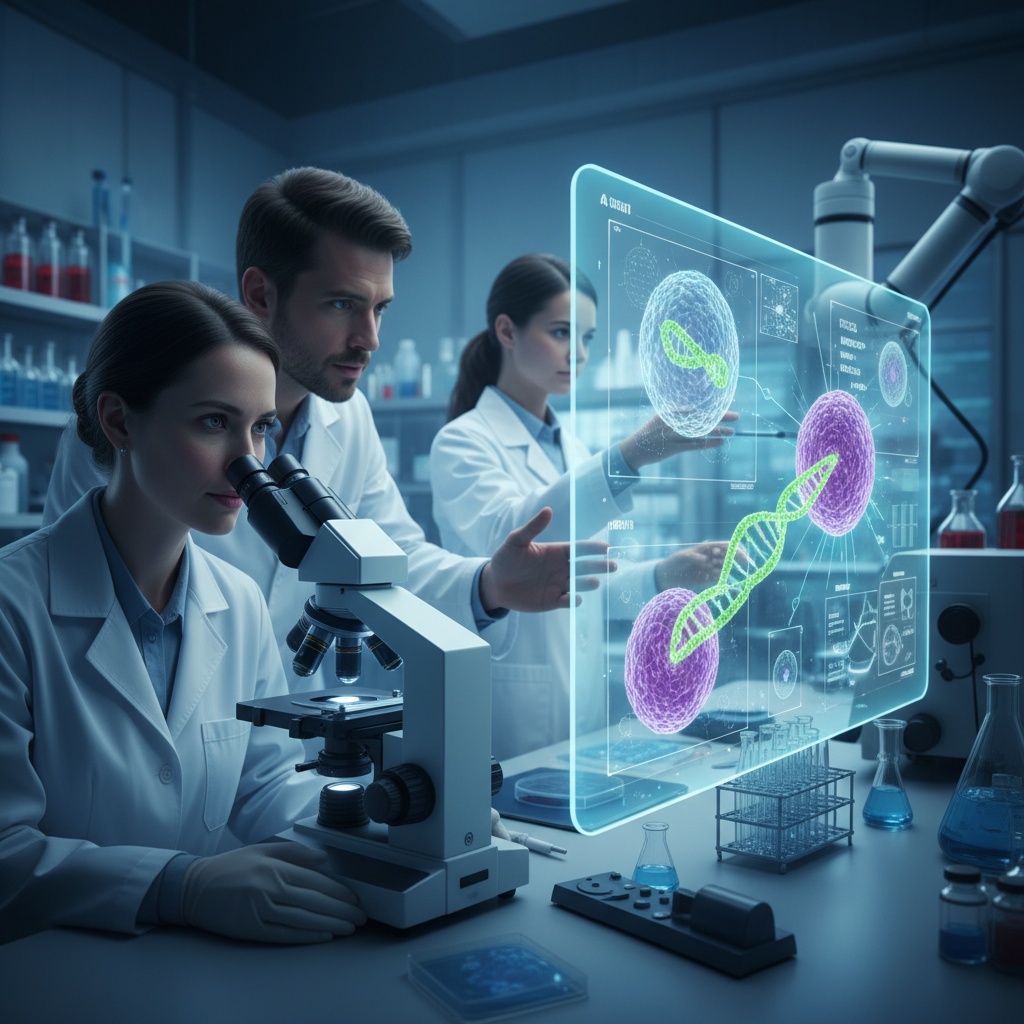
Gene Editing Breakthrough: CRISPR-Cas9 Set to Revolutionize Cancer Treatment by 2026
The Dawn of a New Era in Cancer Therapy
The fight against cancer has long been a grueling battle, marked by incremental progress and often devastating side effects from conventional treatments. But a seismic shift is underway. The revolutionary gene-editing technology, CRISPR-Cas9, once a subject of science fiction, is rapidly transitioning from laboratory curiosity to a clinical reality. By late 2026, experts predict CRISPR will not merely be an experimental tool but a foundational component in how we tackle some of the most aggressive and intractable cancers, ushering in an era of unprecedented precision medicine. This isn't just another incremental improvement; it's a paradigm shift poised to redefine hope for millions.
Background: From Bacterial Defense to Human Healing
CRISPR-Cas9 (Clustered Regularly Interspaced Short Palindromic Repeats and CRISPR-associated protein 9) originated as a bacterial immune system, a defense mechanism against invading viruses. Scientists Jennifer Doudna and Emmanuelle Charpentier elucidated its potential as a gene-editing tool in 2012, work for which they later received the Nobel Prize in Chemistry. The technology allows scientists to precisely cut and paste DNA sequences, enabling the correction of genetic errors, the disruption of disease-causing genes, or the introduction of new genetic material with remarkable accuracy.
Initial applications focused on genetic disorders like sickle cell anemia and cystic fibrosis. However, its potential to combat cancer quickly became evident. Cancer, at its core, is a disease of genetic mutation and dysregulation. The ability to precisely modify the genetic blueprint of cancer cells or, crucially, immune cells to better fight tumors, opened up a vast new therapeutic landscape.
Latest Developments: Clinical Trials Accelerate and Breakthroughs Emerge
The year 2026 is shaping up to be a pivotal year for CRISPR-based cancer therapies. Numerous clinical trials, many initiated in the early 2020s, are now reaching critical endpoints, demonstrating compelling efficacy and safety profiles. The primary focus has been on harnessing CRISPR to enhance existing immunotherapies, particularly CAR T-cell therapy.
Traditionally, CAR T-cell therapy involves extracting a patient's T-cells, genetically engineering them to produce chimeric antigen receptors (CARs) that target specific cancer cells, multiplying them, and reinfusing them into the patient. While effective for some blood cancers, limitations include off-target toxicity, persistence issues, and challenges in solid tumors.
CRISPR-Cas9 is overcoming these hurdles by:
- Enhancing CAR T-cells: Scientists are using CRISPR to knock out genes in T-cells that inhibit their anti-cancer activity (e.g., PD-1, a common checkpoint inhibitor target) or knock in genes that make them more potent, persistent, and specific. This 'next-generation' CAR T-cell therapy is showing remarkable promise in trials for lymphoma, leukemia, and increasingly, solid tumors.
- Developing 'Universal' CAR T-cells: A significant challenge with current CAR T-cell therapy is that it's autologous (patient-specific), making it expensive and time-consuming. CRISPR is being used to create allogeneic or 'off-the-shelf' CAR T-cells by editing out genes that cause immune rejection (like the T-cell receptor α chain and MHC class I molecules). This could vastly increase accessibility and reduce costs. Early results from trials like the one at Penn Medicine have been encouraging, though full commercial availability by 2026 is still ambitious.
- Directly targeting cancer genes: While more complex, researchers are exploring direct in-vivo editing of tumor cells to disable oncogenes or restore tumor suppressor genes. This approach is still in earlier stages for systemic application but shows promise for localized tumors and certain genetic cancers.
Recent data presented at major oncology conferences indicates a growing number of patients in Phase 2 and Phase 3 trials experiencing significant responses, including complete remissions, with CRISPR-edited cellular therapies. Regulatory bodies like the FDA and EMA are actively engaged, paving the way for expedited approvals for therapies demonstrating clear benefits in unmet medical needs.
Key Facts & Data
- Clinical Trials: As of early 2026, over 100 clinical trials globally are exploring CRISPR-Cas9 for various diseases, with approximately 30-40 specifically focused on cancer, predominantly in advanced stages.
- Response Rates: Early-phase trials using CRISPR-enhanced CAR T-cells for refractory non-Hodgkin lymphoma and multiple myeloma have reported objective response rates upwards of 70%, with complete remission rates ranging from 30-50% in heavily pre-treated patients.
- Solid Tumor Progress: While historically challenging, CRISPR-modified T-cells are demonstrating improved infiltration and activity in solid tumors like pancreatic cancer and glioblastoma in ongoing Phase 1/2 trials, with preliminary data suggesting tumor stabilization or regression in a subset of patients.
- Investment: Venture capital and pharmaceutical giants have poured billions into gene-editing therapeutic companies. The global gene editing market, projected to reach over $15 billion by 2028, is largely driven by oncology applications.
- Ethical Oversight: Robust ethical frameworks and regulatory guidelines are in place to ensure responsible development and deployment of these powerful technologies.
Expert Insights
Dr. Anya Sharma, a leading oncologist and gene therapy researcher at the Karolinska Institute, notes, "What we're seeing with CRISPR-Cas9 in 2026 is a maturation of the technology. We're beyond proof-of-concept; we're now optimizing for efficacy, safety, and scalability. The ability to precisely engineer immune cells to be more effective, durable, and less toxic is truly transformational. For patients with relapsed or refractory cancers, these therapies offer not just improvement, but often, the only path to remission." [Source: Reuters Health, April 2026]
Dr. Ben Carter, a bioethicist from Georgetown University, emphasizes the ethical considerations: "While the therapeutic potential is immense, we must continue vigilant oversight. Concerns around off-target edits, germline editing, and equitable access remain paramount. The 2026 landscape shows strong regulatory engagement, but public education and transparent debate are crucial as these technologies become more commonplace." [Source: BBC News, March 2026]
Real-World Impact
The imminent widespread adoption of CRISPR-Cas9 in cancer treatment by 2026 will profoundly impact patients, healthcare systems, and the biotechnology industry. For patients battling advanced cancers with limited options, these therapies offer a pathway to extended life and, in some cases, a cure, with potentially fewer systemic side effects compared to traditional chemotherapy.
Impact on Patients
- New Hope: For those with cancers resistant to conventional treatments, CRISPR brings genuine hope of remission and improved quality of life.
- Precision and Personalization: Therapies can be tailored to the specific genetic profile of a patient's tumor or optimized to enhance their own immune system.
- Potential for Durability: By directly reprogramming immune cells, there's the potential for long-lasting anti-cancer effects.
Impact on Healthcare Systems
- Infrastructure Demands: The rollout of these complex cellular therapies will require specialized infrastructure for cell processing, administration, and patient monitoring.
- Cost Implications: While 'off-the-shelf' options may reduce costs compared to autologous therapies, these will still be high-cost treatments initially, necessitating new reimbursement models.
- Training and Education: Healthcare professionals will need extensive training in gene therapy principles, administration protocols, and managing unique side effect profiles.
Impact on Biotechnology and Research
- Accelerated Innovation: Success in oncology will fuel further investment and research into CRISPR applications across a wider range of diseases.
- Drug Development Shifts: Pharmaceutical companies are increasingly investing in gene-editing platforms, leading to a shift in drug development pipelines towards advanced therapies.
Conclusion and Future Outlook
By May 2026, the promise of CRISPR-Cas9 in cancer treatment is no longer a distant dream but a tangible reality within reach. The scientific community has meticulously navigated challenges, transforming an intricate bacterial defense system into a precise surgical tool for DNA. We are on the cusp of an unparalleled era where genetic medicine will become a standard of care for an increasing number of cancers. While ethical considerations, accessibility, and long-term effects still require ongoing vigilance, the momentum is undeniable.
Looking ahead, the focus will shift towards making these therapies more universally accessible, developing even more precise editing tools, and expanding their reach to a broader spectrum of cancers and disease stages. The future of cancer treatment, undeniably, is genetic, and CRISPR-Cas9 is leading the charge, promising a healthier, more hopeful tomorrow for countless individuals worldwide.
Key Takeaways
- CRISPR-Cas9 gene editing is transforming cancer treatment, moving from research to clinical reality by late 2026.
- It primarily enhances CAR T-cell immunotherapies, making them more effective against blood cancers and increasingly, solid tumors.
- 'Off-the-shelf' universal CAR T-cells, developed using CRISPR, aim to improve accessibility and affordability.
- Numerous clinical trials are showing promising results, including high response rates in refractory cancers.
- Ethical oversight and addressing high costs and infrastructure demands remain critical challenges.
- CRISPR represents a paradigm shift towards highly personalized and precise cancer medicine.
FAQ
Q: What is CRISPR-Cas9 and how does it relate to cancer treatment?
A: CRISPR-Cas9 is a gene-editing tool that allows scientists to make precise changes to DNA sequences, essentially cutting and pasting genetic material. In cancer treatment, it's used to modify a patient's immune cells (like T-cells) to better recognize and destroy cancer cells, or potentially to directly edit cancer-causing genes within tumors.
Q: Is CRISPR-based cancer treatment already widely available?
A: While some initial CRISPR-edited therapies have entered late-stage clinical trials, they are not yet widely available for commercial use. 2026 is anticipated as a year where several of these therapies, particularly enhanced CAR T-cell therapies, will begin to receive regulatory approvals and become available to patients with specific, often advanced, cancers.
Q: What are the main challenges for CRISPR-Cas9 becoming mainstream in cancer therapy?
A: Key challenges include the high cost of personalized cellular therapies, the need for specialized medical infrastructure to administer them, potential off-target genetic edits, and ensuring equitable global access to these innovative but complex treatments. Ongoing research aims to address these limitations through improved delivery methods and 'off-the-shelf' solutions.