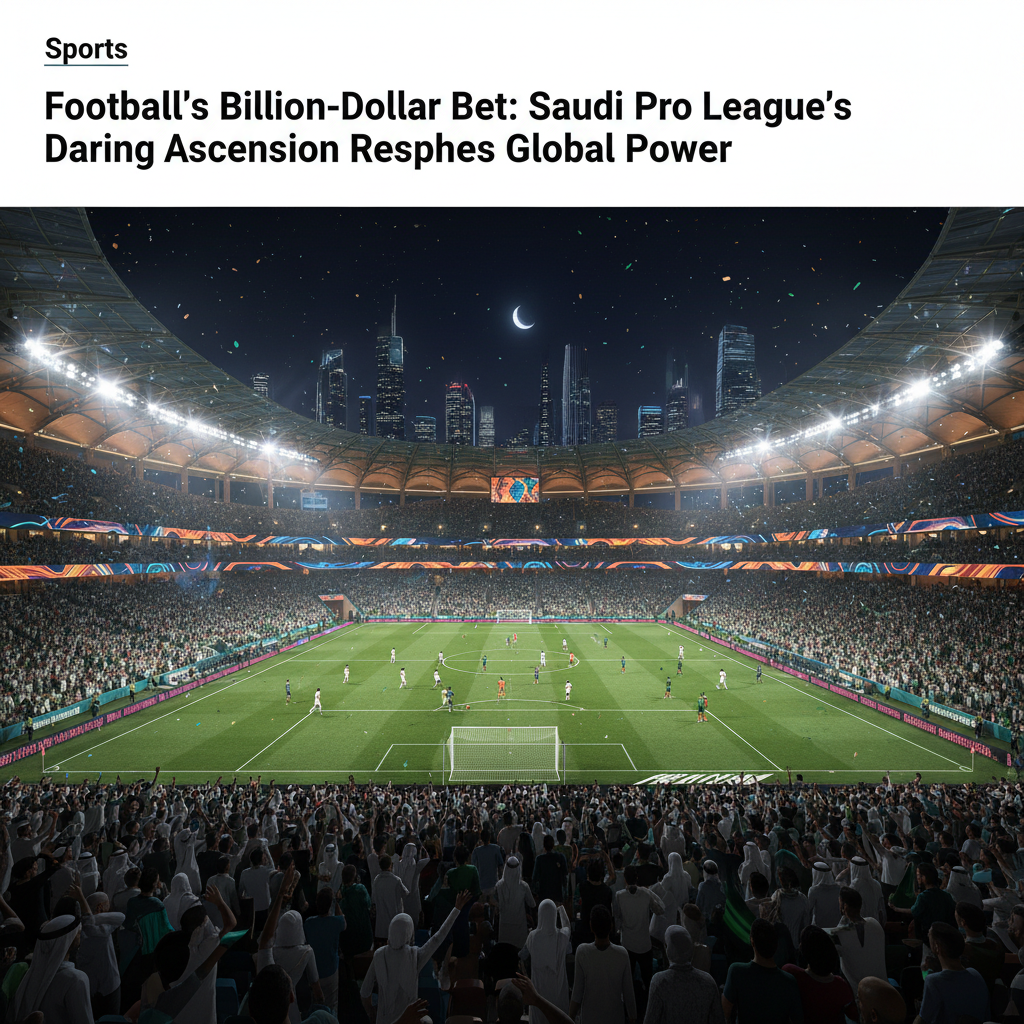
Football’s Future at Stake: FIFA’s Radical Club World Cup Reshapes Global Landscape
The audacious expansion of FIFA’s Club World Cup is sending shockwaves through the footballing world, igniting a fierce debate about player welfare, club finances, and the sport’s very soul. With the inaugural 32-team tournament just around the corner in 2025, stakeholders from powerful European clubs to player unions are grappling with unprecedented changes that threaten to fundamentally alter the global football calendar and its delicate ecosystem. The ramifications of this grand vision are poised to define the sport for decades, making this one of the most critical discussions in football today.
Background: A Vision Born from Ambition
For years, FIFA, under the leadership of Gianni Infantino, has harbored ambitions to elevate the Club World Cup from a relatively niche annual event to a marquee, quadrennial spectacle rivaling the FIFA World Cup itself. The existing format, a seven-team tournament, often struggled to capture global attention outside of the participating continents. The new vision, first mooted in the late 2010s, aims to transform it into a major source of revenue and global prestige, bringing together the world's elite clubs in a month-long extravaganza.
The genesis of this expansive project lies in FIFA's desire to diversify its revenue streams, reduce its reliance on the quadrennial men's World Cup, and offer a truly global club competition that transcends continental confederations. The commercial potential, particularly in key markets, is seen as immense, promising significant financial injections for participating clubs and confederations.
However, this ambition has been met with significant resistance. Early proposals faced strong opposition, particularly from UEFA and top European clubs, precisely because of concerns over an already congested calendar. After prolonged negotiations and various iterations, FIFA announced the expanded format in 2022, confirming the first 32-team tournament for June-July 2025 in the United States, featuring clubs from all six confederations. This strategic move, placing it just a year before the expanded 2026 FIFA World Cup, underscores FIFA's intent to dominate the global football narrative for the next two summers.
Latest Developments: The Looming Scheduling Conflict & Player Backlash
As of May 2026, the football world is abuzz with the impending 2025 Club World Cup. The primary point of contention remains the already brutal global football calendar. Player unions, particularly FIFPRO, have been vocal in their opposition, citing severe concerns over player welfare and the risk of burnout and injuries. They argue that adding a month-long, high-intensity tournament, following an already demanding club season and preceding international breaks and pre-season, is unsustainable.
Recent statements from prominent managers and players on the eve of major club competitions in Europe have reignited the debate. Concerns are mounting that the pressure on top players will become intolerable, potentially impacting their careers and the quality of play. The scheduling also clashes with several European clubs’ pre-season plans and marketing tours, leading to a direct conflict of interests.
Key Figures & Statements:
- FIFPRO: The global players' union has consistently urged FIFA to reconsider, proposing alternative formats or a more balanced calendar. Their recent report, detailing accumulated minutes and travel for elite players, reinforces their warnings. (See FIFPRO's official stance on player workload).
- Jurgen Klopp (Liverpool FC, then): Before his departure, Klopp was a vocal critic of fixture congestion, predicting severe consequences for player health. His sentiments are echoed by many top-tier managers.
- Carlo Ancelotti (Real Madrid CF): While acknowledging the prestige, Ancelotti and others have voiced concerns about the physical toll on players, especially those involved in international duty and deep runs in club competitions.
Moreover, the qualification process has been finalized, with many top European and South American clubs securing their spots. The financial incentives, a reported participation fee in the tens of millions for some clubs and significantly more for the winner, serve as a strong pull, despite the operational headaches.
Key Facts & Data
- Tournament Dates: June 15 – July 13, 2025
- Host Nation: United States
- Participating Teams: 32 clubs
- AFC (Asia): 4 teams
- CAF (Africa): 4 teams
- CONCACAF (North/Central America & Caribbean): 4 teams
- CONMEBOL (South America): 6 teams
- OFC (Oceania): 1 team
- UEFA (Europe): 12 teams
- Host Country Slot: 1 team (likely from CONCACAF)
- Match Format: Group stage followed by knockout rounds
- Estimated Prize Money: Reports suggest participation fees could exceed $50 million for European participants, with the winners potentially earning over $100 million in total. This represents a massive increase from previous editions.
- Player Load: A recent FIFPRO study highlighted that top players already play up to 75-80 matches per season across club and international duties. Adding a month-long tournament with potential high-intensity games will exacerbate this, pushing the total to potentially 85-90 competitive matches in a 12-month cycle for some.
- Commercial Value: FIFA projects the expanded CWC to generate over $3 billion in commercial revenue, signifying its status as a major new pillar in the organization's financial strategy. This aims to distribute wealth more broadly across confederations, though the lion's share is expected to benefit already powerful clubs.
Expert Insights
Dr. Sarah Davies, Sports Physiologist, University of Loughborough
"From a physiological perspective, the expanded Club World Cup is highly problematic. Elite footballers are already operating at their absolute limits. The compressed recovery windows, extensive travel, and the mental strain of high-stakes competition significantly increase the risk of soft tissue injuries, chronic fatigue, and even shorten careers. We're moving towards a model where sustainable performance is secondary to commercial opportunities, which is a dangerous trajectory for player health."
Mr. Alejandro Vargas, Football Economist, Global Sports Analytics
"The financial allure of the new Club World Cup is undeniable, especially for clubs outside Europe's elite who stand to gain unprecedented revenue. For FIFA, it's a bold move to create a truly global club competition and carve out a larger piece of the commercial pie. However, the economic model hinges on attracting top talent, and if player burnout compromises the quality of play or leads to boycotts, the long-term commercial viability could be jeopardized. It's a high-stakes gamble that could either elevate global club football or fundamentally damage the relationship between governing bodies and players."
Ms. Isabella Conti, Former Sports Lawyer, FIFA Governance Expert
"The legal battles around calendar congestion and player rights are only just beginning. Player unions have strong arguments regarding contractual obligations, duty of care, and fair compensation for extended playing seasons. While FIFA has significant power, ignoring player welfare concerns repeatedly could lead to serious industrial action or legal challenges. The success of this tournament will rely on FIFA's ability to balance its commercial ambitions with a genuine commitment to player health and a more collaborative approach with clubs and leagues."
Real-World Impact
The impact of the expanded Club World Cup is multi-faceted and will be felt across various levels of football.
Player Health and Performance
This is perhaps the most critical concern. Players face an unprecedented physical and mental load. We could see an increase in injuries, particularly for those who play significant minutes for club and country. This may force clubs to rotate squads more heavily, potentially affecting league competition quality, or lead to more players retiring earlier due to cumulative wear and tear. Furthermore, the absence of a proper off-season could impact players' long-term readiness for future tournaments like the 2026 World Cup.
Club Competitions and Domestic Leagues
The insertion of a month-long tournament in the summer significantly squeezes domestic league and cup schedules. Leagues might be forced to consider even tighter schedules, reducing winter breaks or increasing midweek fixtures, which further burdens players. Smaller clubs, not participating in the CWC, might find their pre-season plans disrupted by the absence of their top international players who are participating, creating a competitive disadvantage.
Financial Landscape and Global Equity
While major European clubs will benefit financially, an expanded Club World Cup also offers substantial financial rewards to clubs from other confederations. This could theoretically help bridge the financial gap between continents, allowing clubs outside of Europe to retain talent and develop infrastructure. However, it also solidifies the power and wealth of the already dominant clubs, potentially creating an even wider chasm between the elite and smaller clubs who struggle to qualify.
Commercialization of Football
The tournament underscores FIFA's strategy to intensify the commercialization of football. By creating more premium content, FIFA aims to attract more sponsors and broadcast revenue. This move reflects a broader trend in sports, where traditional elements are constantly being re-evaluated for their commercial potential. The risk, however, is alienating fans who may tire of an over-saturated calendar, or who feel the integrity of the sport is being compromised for profit.
Fan Experience
For fans, the prospect of seeing the world's best clubs compete in a high-stakes tournament is exciting. However, the timing, coinciding with the brief summer break, could lead to fatigue among some. Furthermore, ticket prices and accessibility for international fans will be crucial factors in its success. There's a fine line between providing compelling entertainment and exhausting the audience with too much football.
Conclusion and Future Outlook
The expanded FIFA Club World Cup represents a monumental shift in the global football landscape. While promising unprecedented financial windfalls and a truly global spectacle, it arrives laden with significant challenges. The most immediate and pressing concern revolves around player welfare and the severely congested fixture calendar. How FIFA, clubs, and player unions navigate these issues in the coming months will dictate the immediate success and long-term viability of this new competition.
Looking ahead, the 2025 tournament will serve as a critical litmus test. Its reception, the prevalence of player injuries, and the feedback from clubs and fans will shape future iterations. FIFA faces the delicate task of balancing commercial ambition with the fundamental health and integrity of the sport. Should the tournament prove a commercial success without catastrophic player burnout, it could become a staple of the global calendar. However, if it exacerbates player welfare issues and alienates key stakeholders, FIFA may be forced to re-evaluate its grand vision, potentially leading to further reforms in how global football is organized. The future of global football, particularly for its elite players, truly hangs in the balance.
Key Takeaways
- FIFA's expanded 32-team Club World Cup in 2025 is a major commercial and sporting initiative.
- Severe concerns persist regarding player welfare, burnout, and injury risks due to the already congested football calendar.
- The tournament offers significant financial incentives for participating clubs, particularly those outside Europe's elite.
- Expert opinions highlight the physiological challenges for players and the potential for legal/industrial disputes.
- The success of the tournament hinges on FIFA's ability to balance commercial goals with player health and stakeholder collaboration.
- Its impact will reshape club competitions, financial distribution, and the overall commercialization of football globally.
FAQ
Q: What is the primary reason for FIFA expanding the Club World Cup?
A: FIFA aims to elevate the Club World Cup into a marquee global club competition, diversify its revenue streams beyond the men's World Cup, and offer significant financial incentives to clubs worldwide, thereby increasing its influence and commercial footprint in club football.
Q: What are the main concerns surrounding the new tournament format?
A: The primary concerns revolve around player welfare due to an already congested global football calendar. Player unions and managers fear an increased risk of burnout, injuries, and career shortening for elite players, along with disruptions to domestic leagues and club pre-seasons.
Q: How will the new Club World Cup financially benefit clubs?
A: The expanded tournament will offer substantial participation fees and prize money, with reports suggesting tens of millions for European clubs and a potential total payout of over $100 million for the winner. This represents a significant financial boost, particularly for clubs from smaller confederations.